
Map service activity against the actual speaking schedule
Ask catering to describe the meal as a sequence: entry, placement, beverage service, clearing and any replenishment. Then compare that sequence with the program’s opening remarks, videos, awards and discussion periods. A single agenda label such as lunch does not reveal the moments when carts or dish collection may compete with speech.
In a hypothetical Scottsdale luncheon, a short welcome could occur before service begins, while substantive remarks follow the initial plate placement. That is a scheduling option, not a universal rule. Catering must confirm what is workable for the selected service format, and the program owner must decide which remarks genuinely require uninterrupted attention.
Reserve quiet windows for content that needs them
Choose quiet windows deliberately rather than requesting silence throughout the meal. A recorded message, a sensitive announcement or a speaker taking audience questions may deserve a temporary pause in clearing. Background conversation or an informal networking interval may tolerate more movement. Mark those distinctions in the shared running order.
Agree on who signals the pause and who releases service afterward. If remarks run long, catering needs a contact who can make a program decision rather than an open-ended instruction to wait. Raising microphone volume is not a reliable cure for competing dish noise and may make the room less comfortable without improving clarity.
Resolve the lighting tradeoff before doors open
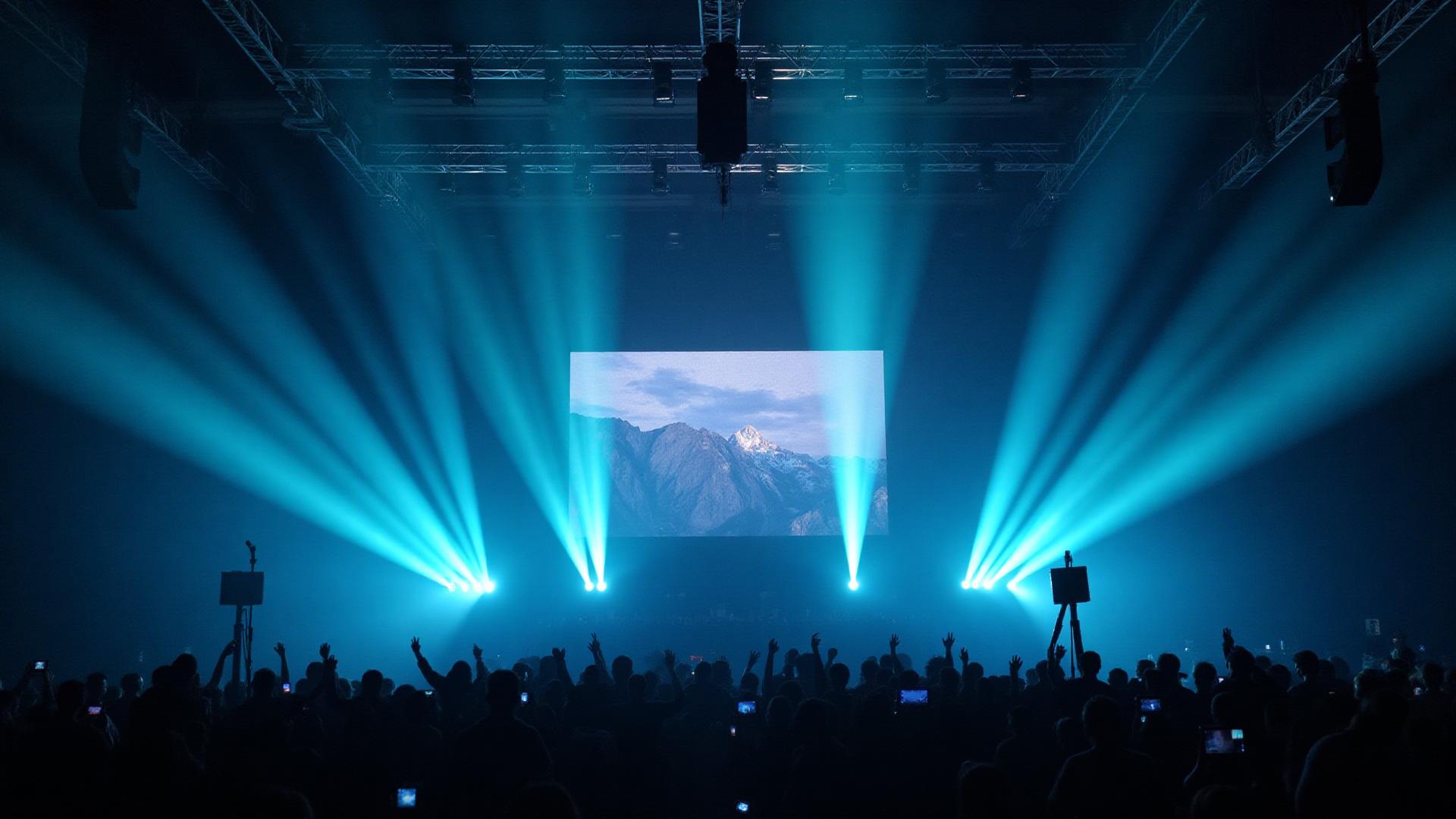
Dining and presentation viewing place different demands on room light. Attendees need to see food and move comfortably, while projected content may lose contrast under brighter ambient lighting. Ask the AV lead and venue which approved lighting adjustments can support both needs without assuming that every fixture or room zone is independently controllable.
Test representative content in the intended meal-service lighting condition. Small text and subtle chart colors can become difficult to read even when a title slide looks acceptable. If the room cannot support the desired visual detail during dining, simplify the content or move that portion of the presentation. Exact display and lighting configurations need a quote.
Coordinate service routes with audience participation
Review the proposed layout with catering and the venue before approving it. Identify service entrances, routes between tables and any planned path for presenters or audience microphones. The aim is to avoid overlapping movements, not to improvise barriers or reroute staff through unapproved spaces.
An audience question period creates a different circulation pattern from a seated keynote. If staff will carry microphones, decide how they will coordinate with active service. Keep access and exits unobstructed, with venue review of the layout. Technical cable routing belongs with qualified AV personnel, not a last-minute furniture adjustment by another team.
Give both teams one live timing contact
During the event, a speaker may start late or a meal segment may take longer than expected. Designate one program contact to reconcile those changes with the catering and AV leads. That person should communicate the revised speaking window and service action together, preventing one team from resuming while another is preparing a quiet moment.
- Mark service activity beside speaking segments.
- Identify essential quiet windows.
- Test content under meal lighting.
- Approve service and microphone routes.
- Name the live timing decision maker.
Put the plan into practice
Good catering coordination protects specific listening moments while allowing meal service to function. Agree on the sequence, lighting conditions, movement routes and live signals together, rather than asking either team to compensate for conflicts after they begin.
Corporate AV and event production in Arizona